
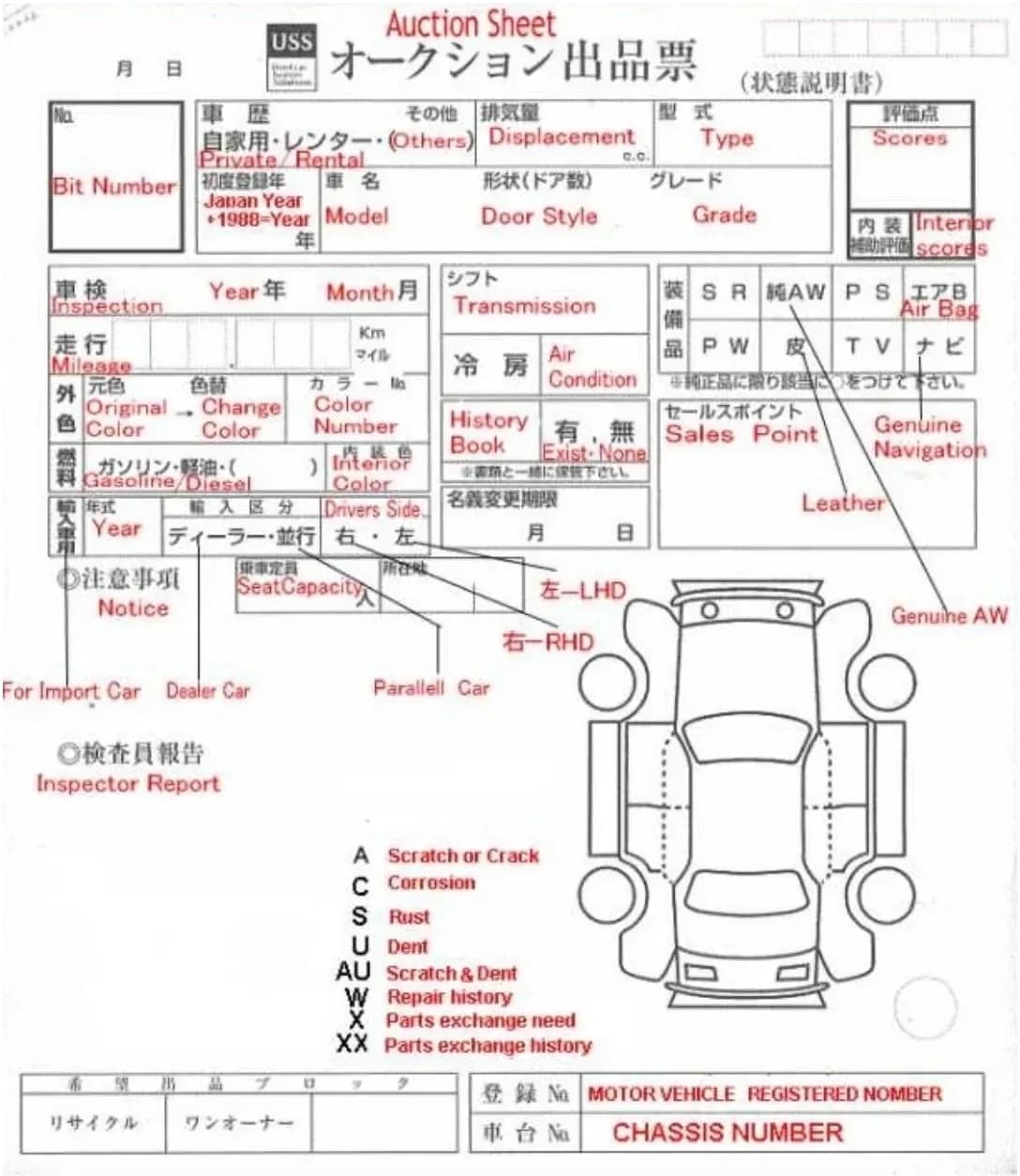
Auction Sheet
Understanding Vehicle Condition
Before you bid on a Japanese auction car, the condition report is your clearest window into what you are actually buying.
A Japanese vehicle auction sheet is the official inspection report used at Japanese car auctions. It captures the essentials buyers rely on: auction grades, verified mileage, accident history, interior and exterior condition, and inspector comments — typically written in Japanese.
For imported and JDM vehicles, reading that sheet correctly is critical. Many buyers skim auction bid sheets without fully grasping handwritten notes or grading symbols, which can lead to unexpected findings after purchase.
- Records overall grade, mileage, and accident or repair history
- Uses interior and exterior marks to map cabin wear and body damage
- Lists equipment codes for features such as AC, ABS, and navigation
- Includes Japanese inspector notes that often reveal what grades alone miss
Tyre Condition
Danger
Worn
OK
Good
Replace now
Fine for now
Plenty left
Check Points
Key details on every sheet
Each report summarizes the vehicle’s condition so you can compare listings with confidence before placing a bid.
Auction grades
Overall condition scores that summarize how auction inspectors rated the vehicle.
Different auction house standards may vary slightly.
- S< 1 year, < 10,000 km, perfect
- 6< 3 years, < 30,000 km, perfect
- 5< 50,000 km, minor scratches
- 4.5< 100,000 km, some scratches
- 4< 150,000 km, minor dents
- 3.5Average condition
- RA/RRepaired vehicles
- ***Non-running/Non-inspected
Interior Condition
Condition of the cabin and visible interior wear from the inspection.
Inspector notes may also flag smoking odor, pet hair, stains, or other cabin issues that grades alone do not capture.
- AAs new condition
- BLight wear marks only
- CMinor repairs needed
- DRequires repairs
- EExtensive work needed
Exterior Condition
Condition of body panels, paint, and visible exterior wear from the inspection.
- AMinor scratch
- A12-3 cm scratch
- A2Up to 10cm scratch
- A3Over 10 cm scratch
- U1Small dimple
- U2Medium dent < 10cm
- U3Large dent > 10cm
- YCrack damage
- W1Perfect repaint
- W2Good repaint
- W3Visible repaint
- X/XXPart replacement
Equipment & Features
Auction sheets also list factory and optional equipment using short codes. Use this key to spot comfort, safety, and drivetrain features at a glance.
- AC/AACAir Conditioner
- SRSunroof
- PSPower Steering
- PWPower Windows
- ABSAnti-lock Brakes
- エアAirbag
- AT/FA/IATAuto
- F4/F5/F6Manual
- AW/純AWAlloy Wheels
- TVTelevision
- ナビNavigation
- カワ革Leather Seats
Auction Grades
What the overall grades mean
The overall grade is the inspector’s summary of the car’s exterior body condition — not its age or mechanical health. It runs on a scale, and where a car sits on that scale tells you most of what you need to know at a glance.
Grade reflects body condition only — not the engine or interior
The grade scale at a glance — aim for 4 and above; treat R / RA with caution.
Warning Signs
Japanese terms that should raise a red flag
These phrases appear in plain Japanese on auction sheets. Dealers know what they mean — many overseas buyers do not. Spot them before you bid.
Accident history declared
Structural repair is on record. Resale value can fall 30–50%, and some markets may refuse insurance.
Mileage unknown
The odometer reading cannot be verified — possible tampering or meter replacement.
Flood damage
The vehicle was submerged. Electrical faults and corrosion often show up later.
Fire damage
The vehicle was in a fire. Even after cosmetic repair, wiring damage can remain permanent.
Theft record
The vehicle was reported stolen. Title and registration problems are likely in the destination country.
Welding
A frame member has been welded — a structural concern that can affect crash safety.
Failed to sell
Listed more than once without selling. Other buyers walked away for a reason.
Sold outside auction
Withdrawn and sold privately — without the usual auction-house protections.
Why It Matters
Read the sheet before you bid
Auction sheets are written for the Japanese auction floor. Grades, symbols, and short handwritten notes can change how you should value a car. Taking time to understand them — or asking our team to translate key details — helps you avoid surprises and bid with clearer expectations.
Need help reading an auction sheet?
Share a listing or sheet number with our team — we will review the grades, notes, and symbols so you can bid with confidence.
Talk to Our Team